"Go to the Library!"

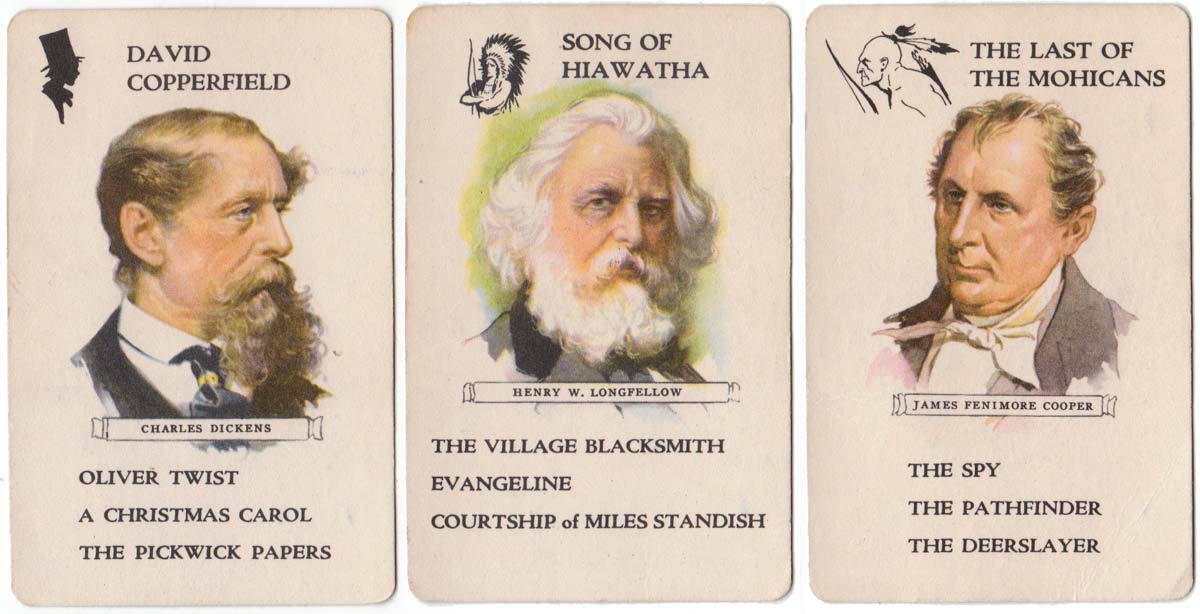
My family has this card game, Authors. It's basically Go Fish, except that instead of asking if people have the 10 of clubs or whatever, you're asking if they have The Last of the Mohicans, for instance. The card game was published in the 50s, apparently, and the choices of canon to construct make that pretty abundantly clear, but that's neither here nor there. Instead of saying "go fish!" when somebody asks you for a card that you don't have, you say "go to the library!" which I wholeheartedly love.
When was the last time you did, by the way, physically go to your local library? Maybe go again soon.
You can check out what?!
This week I cheated: there's a closer branch to me than the main Brooklyn Public Library, but it's within walking distance anyway. My friend Edgar was visiting and on a whim I took us there. I used it as an opportunity to actually get a BPL card. (Did you know? the New York Public Library system is actually separate from the Brooklyn Public Library system?)
The main branch of the Brooklyn Public Library, at Eastern Parkway near the entrance to Prospect Park frequently has an exhibit in the open spaces on the first and second floors. A couple years ago it was about Jay-Z, kinda for a bit longer than I felt was necessary, but also get that bag, you know?
The one up currently is delightful. A bunch of the art pieces in the library's collection (yes!) are on display, with a bent towards queer and trans themes. Edgar and I found a zine on themes aroung cyborgs, transness, body modification and took a tongue-in-cheek quiz modeled after diagnose-yourself magazine quizzes of yore titled "How many genitals should you have?" The results jumped from "you should have one that's reversible" (which, reader, I truly would) to "yeah, you're looking at getting at least 57".
But the part of the exhibit that delighted me the most was the piece of letter paper stuck to one of the displays with masking tape:
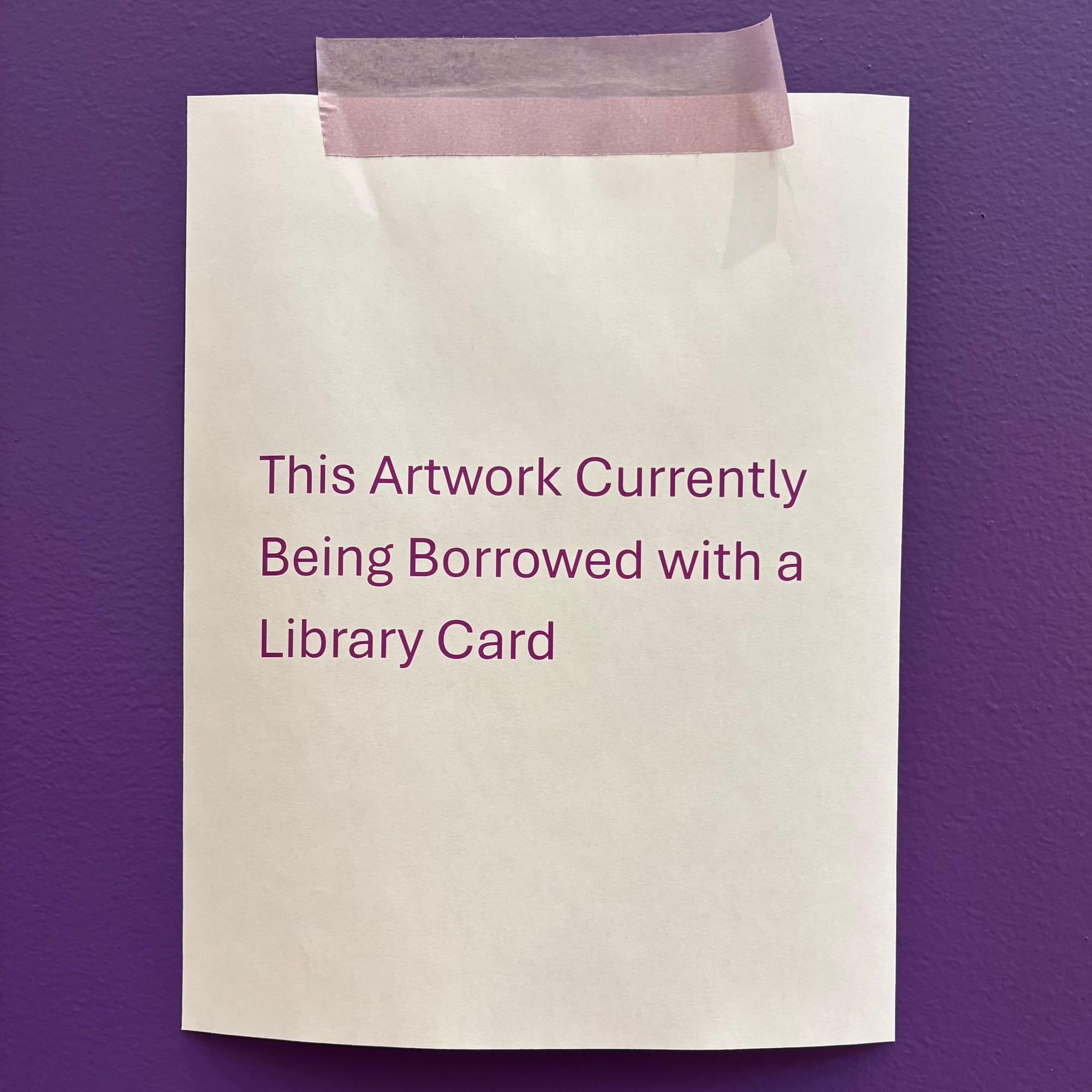
Apparently you really can! Here's the link to their collection. I'm, uhhh, absolutely gonna try it out.
Over the summer I visited my baby sister out in Provo, Utah, where she and her husband did grad degrees in Electrical Engineering. One of the afternoons we spent hanging out at their public library and another we went to their rec center, both of which are truly sites to behold. The library is like three or four floors, with ample windows and seating, a quiet atmosphere and gently spaced shelving. The rec center has indoor and outdoor pools, a track, weights, and enough water slides that I half-wondered if I had wandered into a theme park.
Sometimes, by comparison public spaces in New York can feel a bit too well-loved. As if by virtue of having some of the oldest versions of these space open to the public, New York is speedrunning the process of needing to give them an update and running into bureaucratic cruelties, like Eric Adams shuttering libraries on Sundays for months in 2024 and nearly nixing Saturdays too.
Y'all means all (or whatever)
The Provo public library also, I imagine, has a differing amount of exposure to just what it means to be open to the general public. When I lived in Boston, my then-girlfriend worked in the Boston Public Library system and had more stories (I have to imagine) than she even shared about interacting with people experiencing homelessness, drug abuse, etc. I have another friend in Buffalo whose been working at the library for years, and has built out an incredible "makerspace" there.
To get a library card in Brooklyn there is an online form you fill out (while in the library) which gives you immediate access to a kind of "starter account", and then you can verify that you live in Brooklyn with one of the people at the checkout desk to get a physical card and lift whatever restrictions they impose. Waiting in line to chat to one of the checkout people (somehow the third trans woman librarian I've mentioned today), we kind of laughed—me in "such is life" amusement, but it seemed like for her there was a certain amount of genuine "what the hell"—at the number of people in line attempting to not come off as homeless or otherwise in distress.
I guess if this bit of the post has a point it's that trans women librarians are salt of the earth, tough as nails, some of the best people I know, and every library system should give them a raise and the best health insurance policies out there. I don't know that I could thread the needles that are "Tuesday" for public librarians.
Not enough Springer yellow
I look up to Edgar for his understanding of the profession of academic mathematics. He told me that sometimes when visiting a university to give a talk, he'll stop by the library and take math books in our subfield off of the shelves and put them in the reshelving cart. Not to be a pest, but because many libraries track reshelving as a kind of "internal" circulation, which is a positive indicator for the worth of a book or a subject being given some of the limited prime shelving real estate.
After looking at the exhibit, getting me a library card, and humoring me as I checked out a Japanese novel that is probably still a bit out of my skill level, Edgar suggested we check out the wing upstairs where math and science books are kept. Like most public libraries (as opposed to university ones), the Brooklyn Public Library uses the Dewey Decimal System, where mathematics is in the 510s. I had gotten used to Tufts (and Rutgers) putting mathematics as QA, so I would have waltzed right by the math books shelf. Perusing it together, we joked that there wasn't enough "Springer yellow" visible, after the color of the many many volumes in the Springer series of Comprehensive Studies in Mathematics.
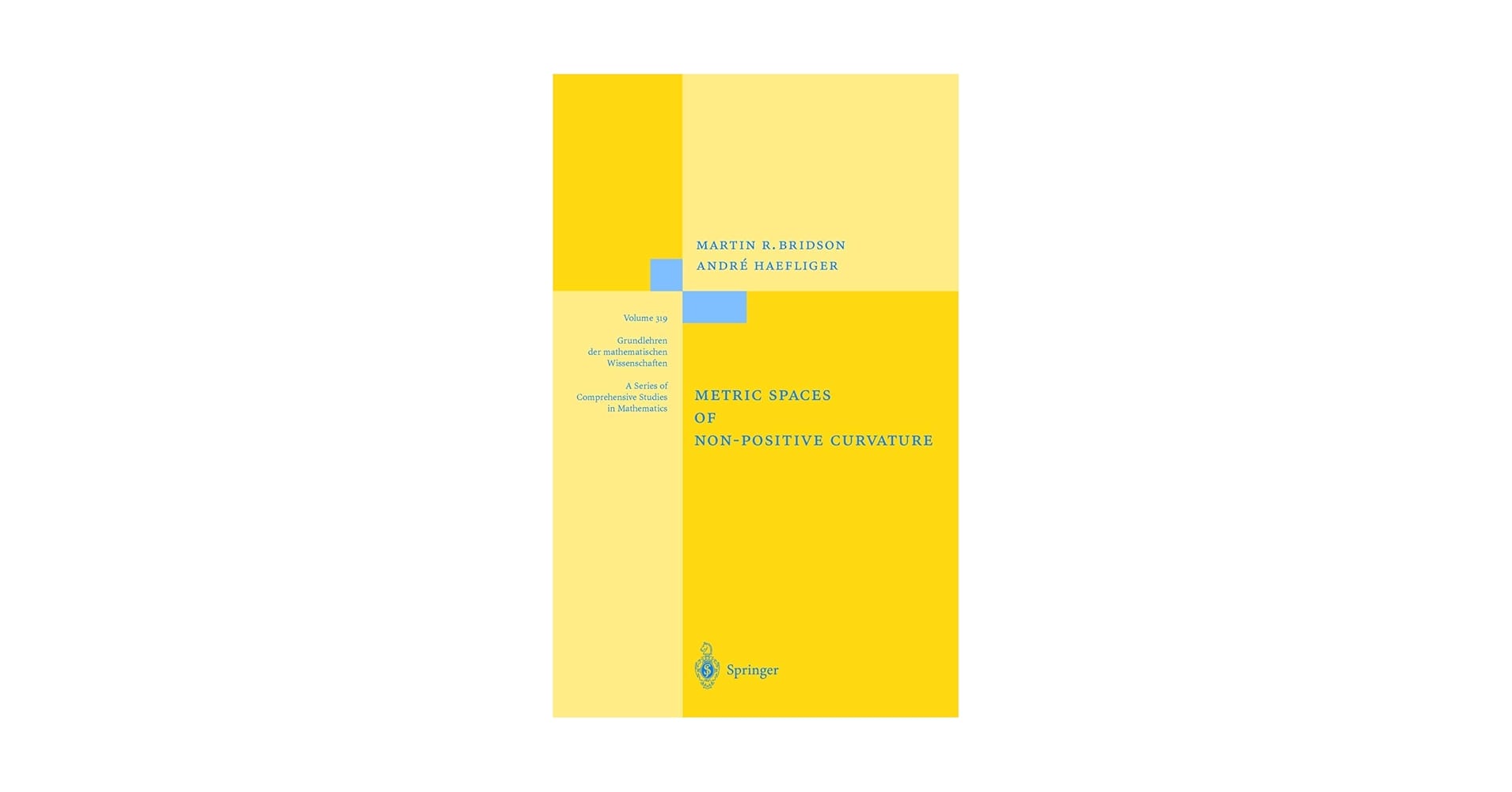
\cite{theBible} in my papers.Truthfully, in fact, I don't know that I ever visited my hometown library's math section, although I did manage to finally check out the Trachtenberg Speed System of Basic Mathematics (that's a PDF) on interlibrary loan at the end of high school after hearing about it via a TED Talk.
(I don't think I really retained any of the speedy tricks for multiplication, division or squaring numbers, but I loved the observation that if you apply the same operations to the repeated digit sums of the numbers in question, you'll get the same results, so you can always check your work. In this rule, additionally 9 = 0, since the operation of repeatedly adding digits, so that for instance 6937 "is" 6 + 9 + 3 + 7 = 25 "is" 2 + 5 = 7, is the same as reducing mod 9—check it: 6390 = 9 * 710—you're basically doing the operations modulo 9, which is why the method works. So for example, if after multiplying 6937 by 15 you think you got 104055 you can compute the check digits, which are 7, 6 and 6 and do the same operation: 7 * 6 = 42 "is" 6, so you can be confident that your answer is correct.)
Mostly I remember as a child truly poring over section 740, the section for drawing, comics, and graphic design, as well as books on computer programming (usually along the lines of "architectural style" of coding—"design patterns" and such), which in those days may have mostly been present in the 600s rather than the 000s.
Sparkle for me, baby
Anyway, my favorite book that I found (which I'll have to go back and check out one of these days, although I think I have plenty of books ahead of it on my to-read list) was a little book by Harvard mathematician Barry Mazur written for an artistically inclined audience about imaginary numbers—specifically about how you should or could imagine imaginary numbers. That is, it's a book about mathematical imagination and imagery.
The title is a delightful bit of mathematical culture: Imagining Numbers (Particularly the Square Root of Minus Fifteen) is exactly how many people I know would give a talk: you give yourself a theme, and then also pick on an example and say a word "particularly" and carry it around with you as a toy example.
My gloss on looking at it for all of two minutes is that it's a good example of one of those books that I love for something that it does by accident: show off the outside-knowledge archive that Barry is working with. Mazur draws on little quotations from classical philosophy, literature, history and so on. I didn't read far enough to get the sense of whether this is him showing off, defensively trying to reclaim mathematics as a discipline of art, or just how he thinks—but I'm hopeful that it's that third one, because that's the kind of writer I also am trying to be. One for whom everything is connected not because there's some transdisciplinary secret thing that I'm tapping into in my work, but just because that's how much there is out there in life, and I'm not gonna hide it from you.
If you are out there making a blog post, I would love for you to pull out the snootiest quote that you love that is even tangentially relevant to the thing that you are writing. I wanna know the cool stuff that you've found in life. I might not go back to read Herodotus (or whoever) more thoroughly based on your little epigraph, but it will make my day to know that something so far from what you're talking about (right? I mean, I haven't read any blog posts or newsletters about ancient Greek historians, but I admit that that's a personal failing) caught your fancy once.
Apparently, though, I might be alone in this. There are two separate contemporary reviews of Mazur's book in the Notices of the American Mathematical Society, and both of them take a moment to gripe about the number of allusions and quotations. Both of them also use a fancy word from German, though, so I think the emperor has no clothes in this instance.
The Swerve of the Shelf
The thing that stuck with me most about founding Mazur's book, though, is that I maybe would not otherwise ever have seen it. Given that the book came out in 2003 and was not (so far as I know) an instant classic, especially given the middling reviews it received within the math community, it's likely out of print. That means I could have found it on a shelf only at a library or the peculiar kind of used book store which deigns to trade in math or popular science books.
Every time that I go to a physical library, even the one or two times that I've waded through the collections of physical copies of mathematical journals, for instance, I happen upon things I didn't know that I was looking for. That kind of browsing is one of the best parts of what we are too quickly starting to think of as "legacy" print media institutions, in my opinion. Ideas want friends, and we thrive when they are in a decently organized, browsable place.
I remember over a decade ago in college noting the difference between searching (on Google, or JSTOR or with my college library's engine) and browsing. Searching would bring up the thing I wanted reliably, particularly if I already knew what I wanted, but browsing would let me broaden and deepen knowledge at the same time, just by standing in front of "the shelf where it happens", as it were.
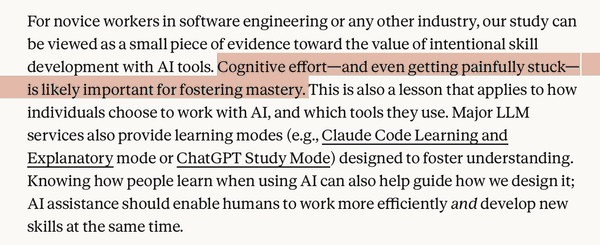
One of the positive spins you could put on the advent of LLMs as far as acquisition of skill, knowledge and expertise, is that if you don't know what you're doing, you might be able to acquire some new keywords from the chatbot. For example, over the summer while working on pop music I learned the term "Reese bass", which was new to me, after being cajoled into asking ChatGPT to analyze a song. (I linked the track cited as the original source of the sound—I bet you'll notice that you've heard this sound all over the radio.)
I don't want to belittle this: acquiring the keywords of pop music production is a task that I don't really know how to do well. Unlike mathematics or programming or synths or language learning, I haven't found really a large body of scholarship or many forums online dedicated to discussing techniques of composition and production. What I am aware of is mostly either more classically minded or more geared towards gear. The people in the space who do have that kind of knowledge and lived experience may put sharing it behind a paywall. Maybe I have to join a subreddit or something.
But if you already kind of know what you're doing, search engines have a downside. Every time a search saves me from having to the shelf where it happens, I miss an opportunity to find what I didn't know what I was looking for.
LLMs, in some forms of using it, have the potential to magnify that downside. Search engines, unless "you're feeling lucky", at least paginate options to choose from—giving you at least a dull glimmer of being in front of the shelf where it happens. The current iteration of chatbots and LLM assistants of all stripes by and large have vanishingly few obvious knobs to tweak beyond "rephrase your question", and precious little in the way of the kind of exploratory browsing that I'm claiming can be so generative.
And anyway, you know what they say—having fun ain't hard, when you're actually using your library card.